
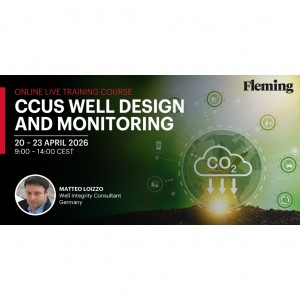
This 4 half-day master-class workshop will provide a comprehensive review of integrity of wells exposed to carbon dioxide (CO2) in the context of Carbon Capture Utilization – for enhanced oil recovery – and Storage (CCUS). CO2 geological storage is a proven technology to reduce greenhouse gas emissions from sources such as coal power plants, cement kilns and steel mills.
Wells are widely considered the most critical containment element, especially older wells that are not used to inject CO2 or monitor the plume evolution in the storage reservoir. The main reason for this perceived risk is the high corrosion rate of carbon steel when exposed to wet CO2, and the tendency of Portland cement to react with the gas.
The course advanced contents build on 15 years’ experience in carbon storage, both in the development and deployment of technologies. First-hand, in-depth knowledge of the subject will allow us to debunk myths and focus on the real challenges of wells encounteringCO2. We will first review the fundamentals of carbon utilization and storage and the market drivers, before introducing the behavior of CO2, and how it is modified by water and contaminants. After analyzing the effect of the gas on cement, steel, and rock, we will focus on wells, old and new, and how their characteristics can make them vulnerable to a loss ofintegrity throughout all the stages of their life cycle.
We will also discuss monitoring technologies and techniques, from pressure testing to logging, before looking at how regulations and standards affect the evaluation of old wells the construction of new ones.
The course is designed for subsurface professionals from the drilling, well integrity, cementing, production and reservoir engineering domains, as well as anybody from industry, government and non-governmental organization wishing to understand what makes a well safe in the presence of CO2. The seminar is interactive, participative and hands-on, supported by real life examples and case studies; its open and relaxed atmosphere provides significant opportunities to network and exchange experience with peers and start finding answers to actual challenges in a collaborative setting.
Venue
VIRTUAL EVENTOrganizer
Fleming EventsSimilar exhibitions
Energy (conventional and renewable)
Oil Gas
Shipbuilding, Port Machinery, Offshore Engineering
Tube, Wire

Electrical Engineering, Electronics
Energy (conventional and renewable)
Environment and Climate Protection
Lighting, Lighting Technology
Plumbing, Heating, Air Conditioning, Refrigeration and Ventilation Technology
Mechanical engineering, machine tools, tools

Energy (conventional and renewable)

Foundry, Metallurgy (Iron, Non-ferrous Metals)
Mining, Geodesy, Geoinformation
Mechanical engineering, machine tools, tools
Environment and Climate Protection
Facility Management

Electrical Engineering, Electronics
Energy (conventional and renewable)

Construction Technology, Materials and Equipment, Interior Fittings
Energy (conventional and renewable)
Industrial Equipment, Maintenance
Information and Communication Technology, Software
Laboratory Technology, Biotechnology
Lighting, Lighting Technology
Plumbing, Heating, Air Conditioning, Refrigeration and Ventilation Technology
World Expositions
Clean technology
Energy (conventional and renewable)
Plumbing, Heating, Air Conditioning, Refrigeration and Ventilation Technology
Environment and Climate Protection
Industrial Equipment, Maintenance
Recently submitted exhibition applications

Energy (conventional and renewable)

Floorings
Furniture, Interior Design
Laboratory Technology, Biotechnology
Medical Engineering, Health, Pharmaceuticals, Care